
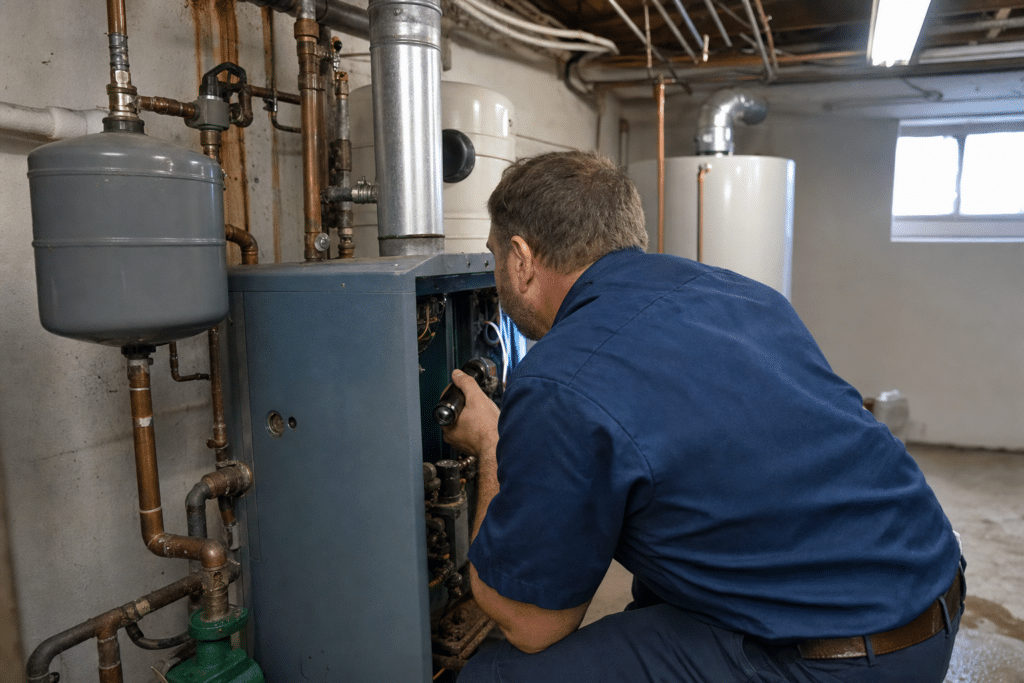
A boiler repair call in Loveland is a different diagnostic situation than a furnace call. The system is older technology, the failure modes are different, and the repair-vs-replace math works differently than it does for a forced-air system. Here’s how to read what’s happening with your boiler and what the common problems actually cost to fix.
Quick Answer: Most common boiler repairs in Loveland run $150 to $600. Igniter, thermocouple, and zone valve failures are at the lower end. Circulator pump failures are in the $350 to $600 range. A heat exchanger failure or repeated pressure problems on a boiler past 20 years old usually opens a replacement conversation.
How to Tell If It’s Repair or Replacement Territory
Boilers are long-lived systems. A well-maintained cast iron boiler can run for 25 to 35 years. A gas fire-tube boiler, which is more common in Loveland homes built since the 1980s, typically runs 20 to 25 years. Age matters, but so does failure type.
Repairs make sense when: the failure is a single component (igniter, thermocouple, zone valve, expansion tank), the boiler is under 18 years old, and there’s no history of repeated failures in the last 3 years. Replacement becomes the right conversation when: the heat exchanger has cracks or confirmed combustion gas leakage, when repairs have totaled more than 50% of replacement cost in the last 2 years, or when the system runs on an older refrigerant or involves components that are no longer serviceable.
The Most Common Boiler Problems in Loveland Homes
These are the failure modes that generate most service calls, in rough order of frequency.
- Igniter or thermocouple failure: The boiler fires but won’t stay lit, or won’t ignite at all. These are wear components with a finite cycle life. Igniter replacement runs $120 to $250. Thermocouple, $80 to $180. Fast fix, common part.
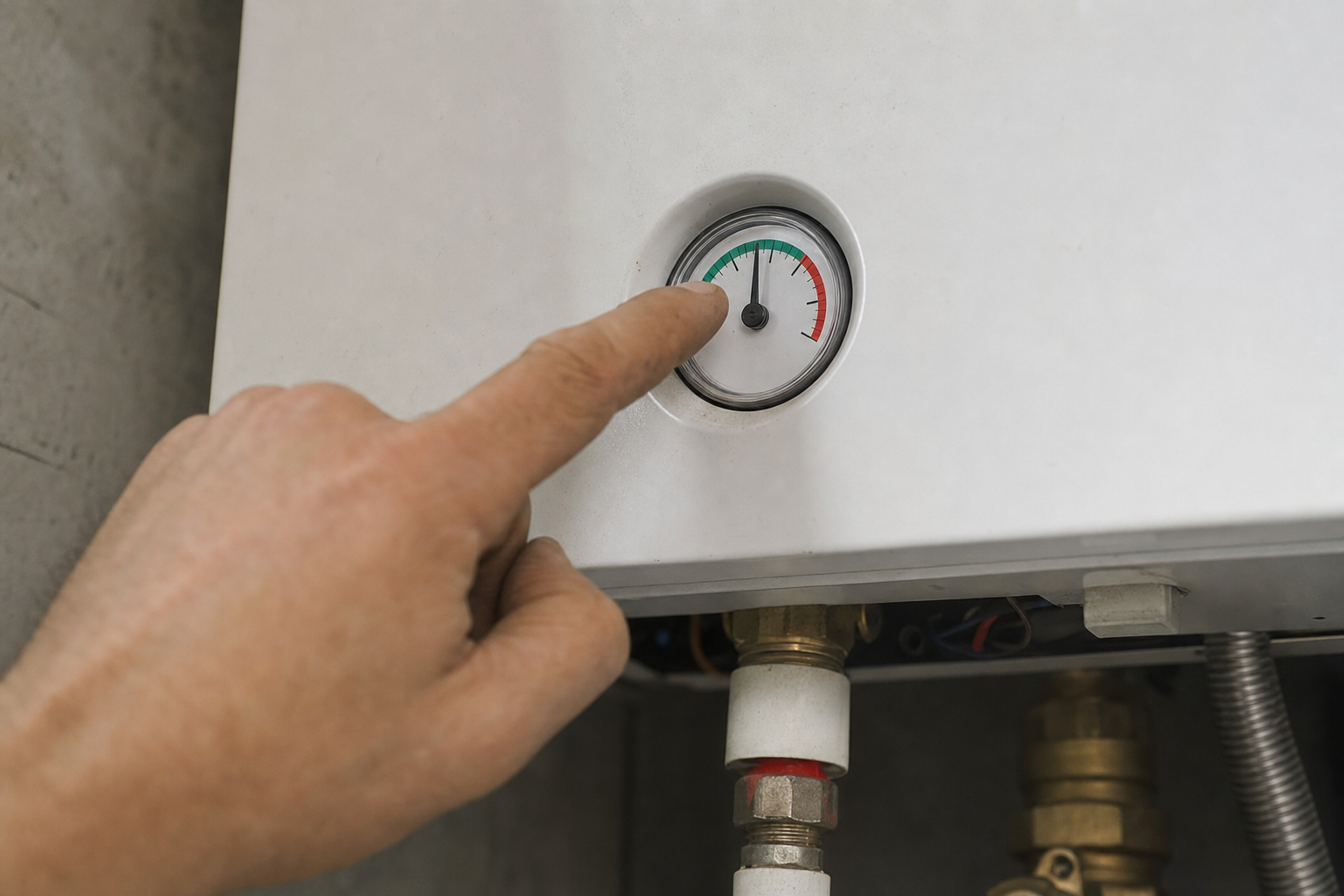
- Low or dropping pressure: The pressure gauge on a properly functioning boiler should sit between 12 and 25 PSI at rest, depending on system height. If it drops repeatedly, you have a leak somewhere, a failed pressure relief valve, or a waterlogged expansion tank. Finding the source is the diagnostic step. A waterlogged expansion tank is a $200 to $350 fix.
- Zone valve failure: Multi-zone systems have a zone valve per loop. A stuck-closed valve means that zone doesn’t heat. A stuck-open valve can cause one zone to steal heat from others. Zone valves run $150 to $300 installed.
- Circulator pump failure: The circulator pump moves hot water through the system. A seized or failed pump means some or all zones don’t heat even though the boiler fires. Circulator replacement runs $300 to $600 depending on pump type and installation access.
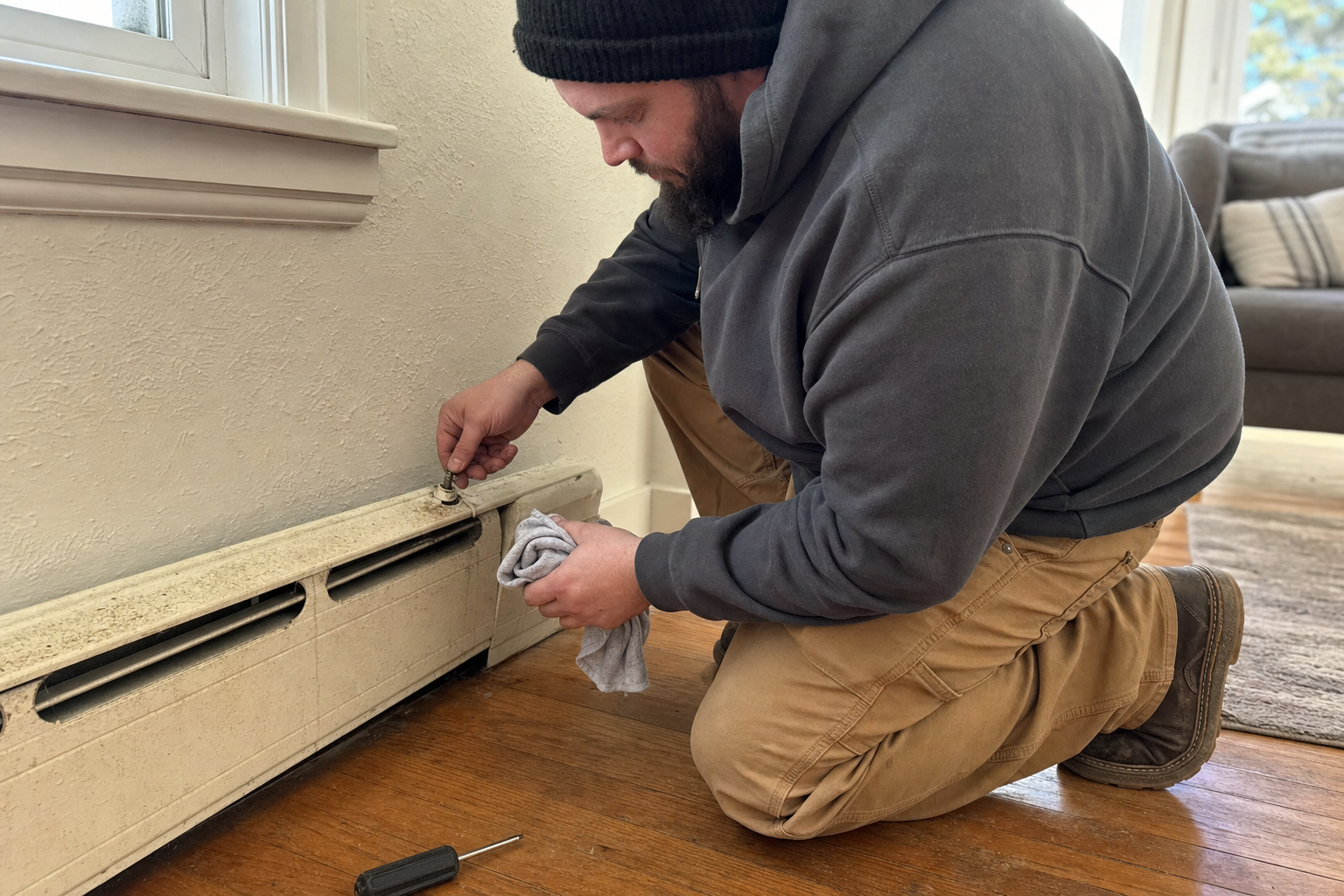
- Air in the system: Air pockets in the pipes or radiators cause cold spots and gurgling sounds. Bleeding the radiators and, if needed, adding an automatic air vent is a straightforward fix. Usually under $150 if a tech is already on site.
No Heat vs. Partial Heat: Different Diagnoses
No heat at all usually points to ignition, thermostat, or controller failure. The boiler isn’t firing. Start by checking whether the boiler is actually getting a call for heat from the thermostat, and whether the pilot or igniter is doing anything when you listen at the unit.
Partial heat, where some zones or rooms are cold but others work, almost always points downstream of the boiler itself. Zone valve stuck closed. Air pocket in that loop. Baseboard sections with fins bent flat or blocked by furniture (yes, this one happens more than you’d expect). A circulator pump that’s only moving partial flow.
The distinction matters because no-heat failures often involve the boiler itself and can be urgent in a Colorado January. Partial-heat failures are usually less urgent and often cheaper to fix.
What to Do Before Calling a Tech
Check the pressure gauge. If it’s below 10 PSI, add water through the fill valve slowly until you reach 15 PSI. Don’t overfill. If the pressure drops again within a few days, stop refilling and call: you have a leak or a relief valve problem that adding water won’t fix.
Check that the thermostat is calling for heat (try bumping it up 5 degrees above room temperature) and that all zone thermostats are set to heat mode, not cool. Sounds obvious, but it eliminates 10% of no-heat calls.
Check the boiler’s reset button if it has one. Many gas boilers have a manual reset that trips on a pressure, temperature, or flame-failure fault. Push it once. If it trips again within 20 minutes, stop and call. Repeated trips mean the underlying fault is still active.
What Boiler Repairs Cost in Northern Colorado
| Repair Type | Typical Cost Range | Notes |
|---|---|---|
| Thermocouple replacement | $80 to $180 | Common wear part, fast fix |
| Igniter replacement | $120 to $250 | Similar job, slightly higher parts cost |
| Expansion tank replacement | $200 to $350 | Waterlogged tanks cause chronic pressure loss |
| Zone valve replacement | $150 to $300 | Per valve; multi-zone systems may need 2-3 |
| Circulator pump replacement | $300 to $600 | Varies by pump size and access |
| Pressure relief valve | $120 to $250 | Safety component, should be addressed promptly |
Boiler Repair Service in Loveland
Cool Ducts handles boiler repair and service in Loveland, Fort Collins, and Greeley. The team is NATE-certified and familiar with the hydronic systems common in older Northern Colorado homes, including cast iron radiator systems, baseboard hot water, and radiant floor setups.
If your boiler is losing pressure, making unfamiliar sounds, or leaving rooms cold while others are fine, call 970-405-5333 to schedule a diagnostic. In January, a boiler that’s limping along will eventually stop, and it’s better to find out on a Tuesday morning than a Saturday night.