
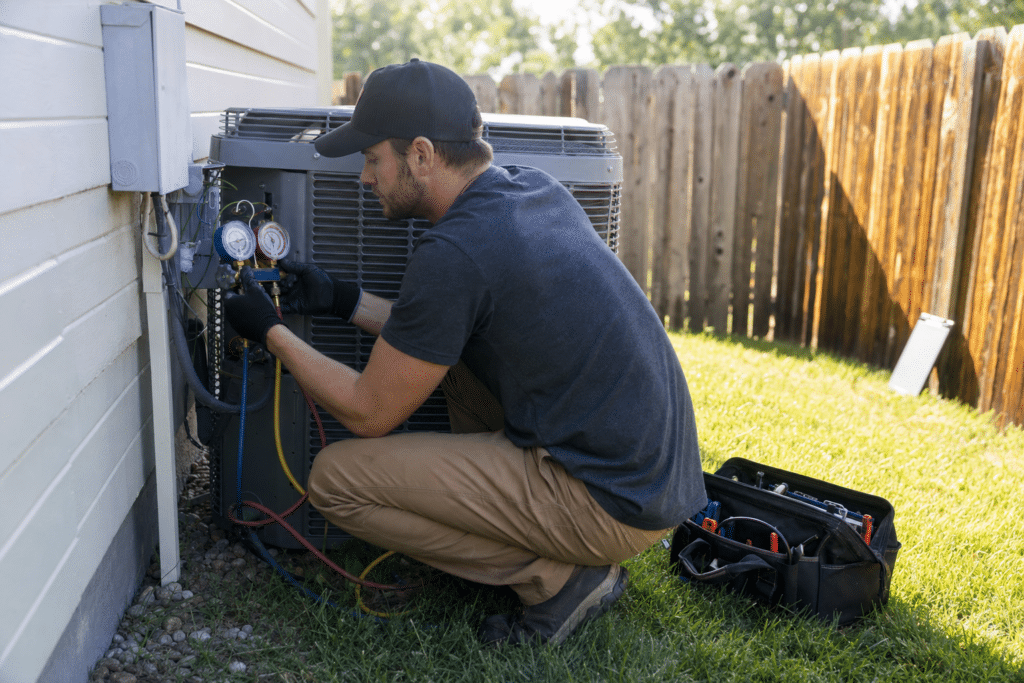
Most Fort Collins homeowners schedule AC maintenance once a year, usually in spring before the heat arrives. But a lot of them aren’t sure what actually happens during that visit, whether it makes a meaningful difference, or what skipping a year costs them. This covers all three.
Quick Answer: An annual AC tune-up in Fort Collins typically runs $89 to $179 for a standard residential system. The visit catches small problems before they become $800 repairs, extends equipment lifespan, and keeps your warranty valid. In a climate where the AC runs hard through June, July, and August, skipping maintenance compounds.
What an AC Tune-Up Actually Covers
A tune-up is a structured inspection and cleaning visit, not a repair. The technician goes through a checklist of components that degrade between seasons. Here’s what a thorough visit includes for a standard split system.
- Refrigerant pressure check: The tech measures both the high-side and low-side pressures against manufacturer specs for the ambient temperature. Low refrigerant usually means a leak somewhere, not just a refill.
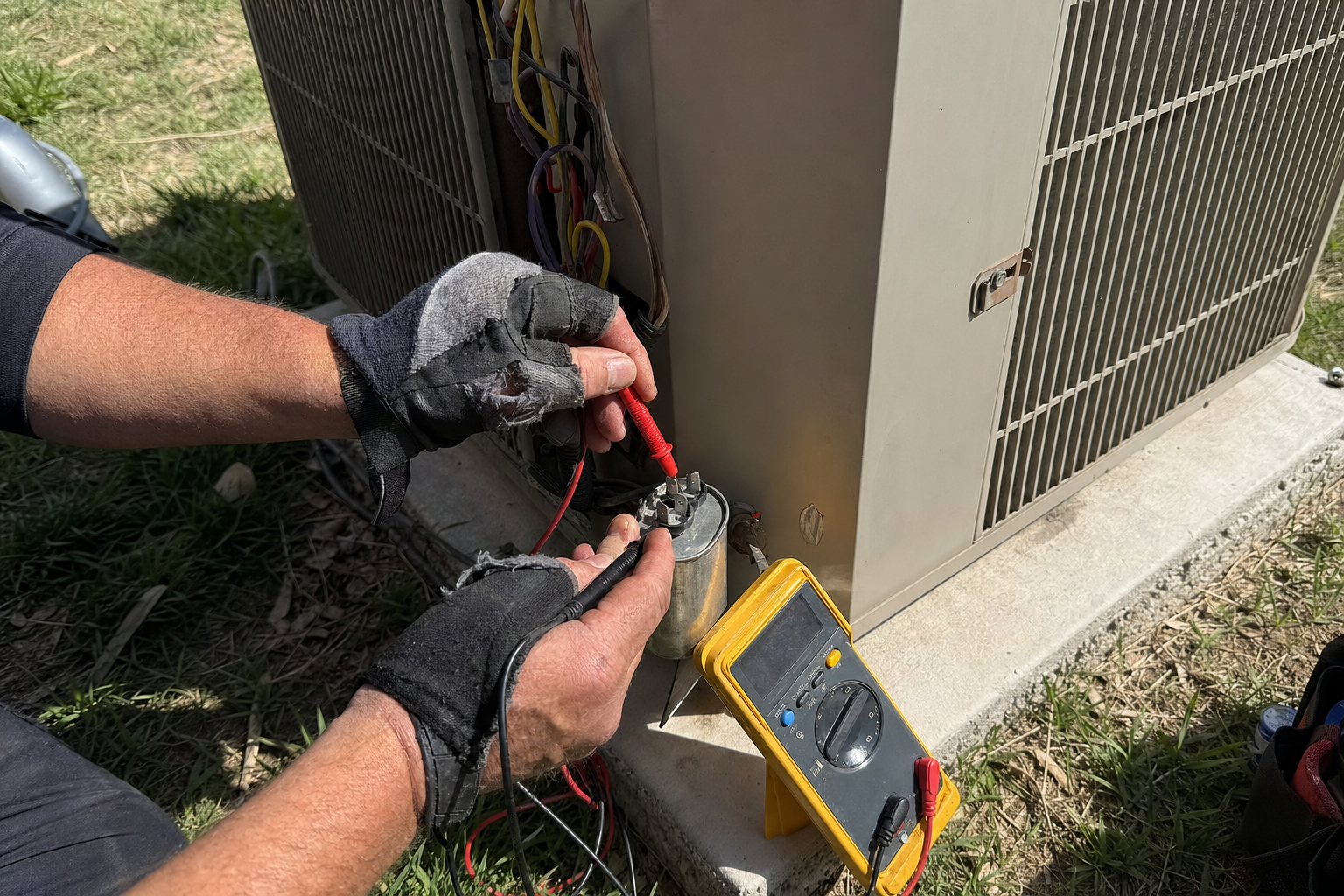
- Capacitor test: Start and run capacitors are electrolytic components that degrade with heat cycles. A weak capacitor raises your compressor draw and can cause hard-start failures in July when you need the system most.
- Electrical connections and contactors: Loose or corroded connections increase resistance, generate heat, and eventually fail. Contactor pitting is visible and predictable.
- Condenser coil cleaning: Dirt and cottonwood buildup on the outdoor coil (it’s called the condenser coil) raises head pressure and makes the compressor work harder. A clogged coil can add 10 to 15% to your operating cost.
- Evaporator coil check: The indoor coil gets inspected for ice, oil staining (which can indicate refrigerant contamination), and airflow restriction.
- Blower motor and belt inspection: Worn belts and undersized blower motors reduce airflow through the system. Static pressure often reveals this.
- Drain line flush: Algae in the condensate drain is extremely common in humid summers. A clogged drain overflows into the air handler, sometimes into drywall.
How Often You Actually Need One in Fort Collins
Once a year is the standard, and spring (April or early May) is the right time. You want the system serviced before the first 90-degree day, not after it. An AC that’s been sitting idle since September will have cottonwood and debris in the condenser coil, and the capacitor has been sitting at charge through temperature swings all winter.
If you have a heat pump rather than a separate furnace and AC, the maintenance interval is the same: once a year. But heat pumps need a fall visit too, before heating season. Two visits per year for heat pumps. One for straight AC systems.
Signs That Maintenance Is Already Overdue
If you haven’t had a tune-up in more than 18 months, watch for these:
- The system runs longer than usual to hit the thermostat setpoint. This usually means the condenser coil is dirty or refrigerant is low.
- Your July electric bill is noticeably higher than the previous year without a weather explanation. A dirty condenser coil can raise compressor energy draw by 10 to 20%.
- The outdoor unit is louder than it used to be. Pitted contactors and weak capacitors both change the sound profile at startup.
- There’s water around the air handler. A clogged drain line is the most common culprit and one of the cheapest fixes if caught early.
- The air coming from the vents feels less cold than it should at a given thermostat setting. Refrigerant, coil, or airflow issue, each has a different fix.
What Skipping Maintenance Actually Costs
The math is straightforward. A capacitor failure in late June costs $150 to $300 for the part and an emergency service call. A compressor failure from repeated hard starts costs $1,200 to $2,400, and on a system past 10 years, that often becomes a replacement conversation.
Refrigerant leaks get more expensive the longer they run. A small leak that adds up to 1 pound of refrigerant loss per season will eventually starve the compressor of oil return and cause a seized compressor. Finding the leak and repairing it at the tune-up costs $150 to $400 depending on location. Replacing the compressor later costs $1,400 to $2,200 installed.
Most manufacturers require documented annual maintenance to honor equipment warranties. An extended warranty that voids at year 3 because of skipped tune-ups is not worth what you paid for it.
What You Can Handle Yourself (and What You Can’t)
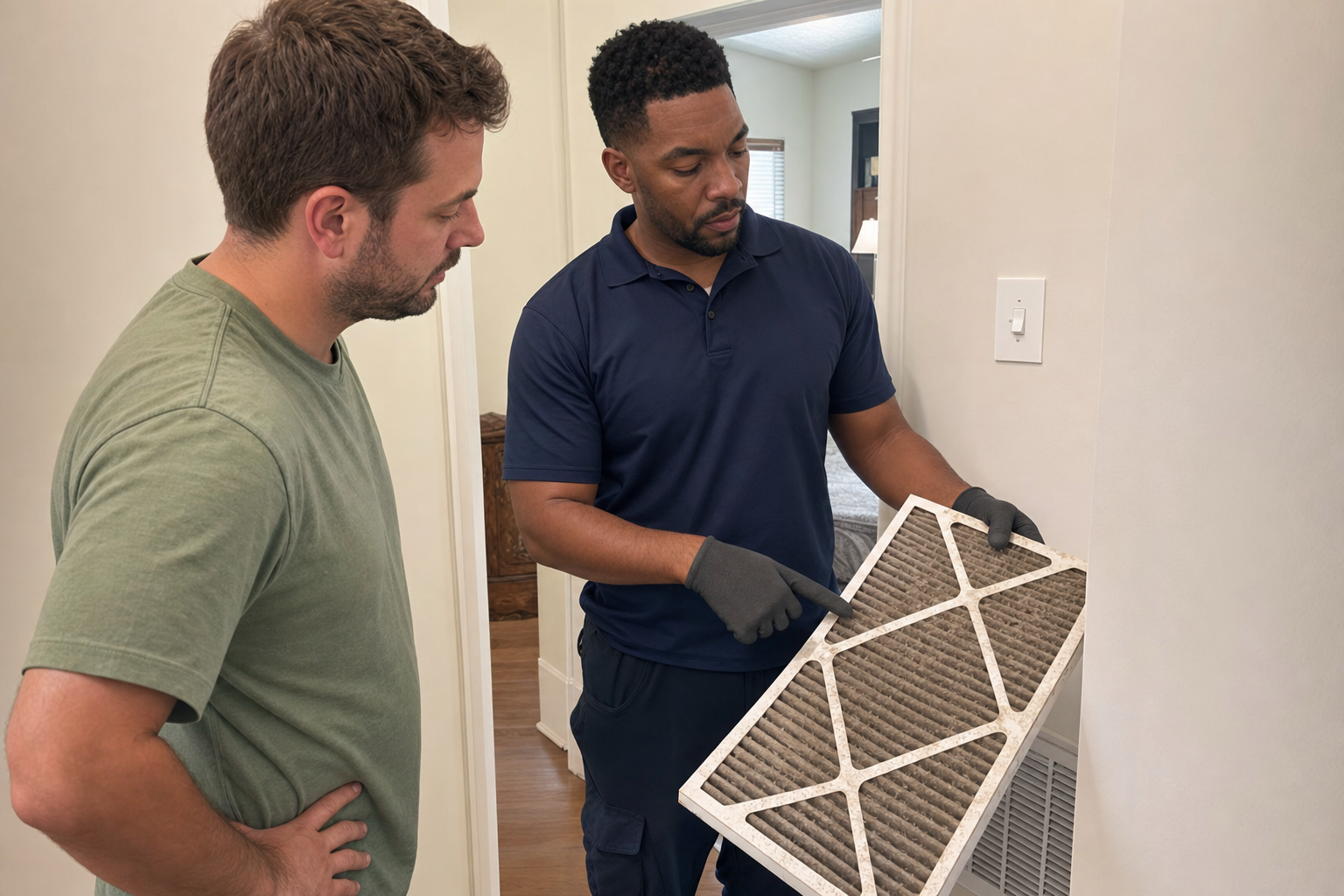
Air filter changes are homeowner territory. A standard 1-inch filter should be replaced every 30 to 60 days during the cooling season, especially in Fort Collins where cottonwood runs heavy in June. A clogged filter starves the blower, raises static pressure, and can ice the evaporator coil.
Keeping the area around the outdoor condenser clear is also DIY. Two feet of clearance on all sides and top. Hose off the condenser coil once a season with a garden hose on low pressure, spraying from the inside out. This takes 10 minutes and removes most of the surface buildup.
Refrigerant handling, capacitor work, and electrical diagnosis need a licensed tech. Refrigerant requires EPA Section 608 certification to purchase and handle legally. A capacitor holds a lethal charge even with power off. These are not DIY tasks.
What to Expect When You Book a Tune-Up
A thorough tune-up visit takes 45 to 90 minutes. The tech works both the outdoor condenser and the indoor air handler. You should get a written report of what was tested, what the readings were, and any items that need attention now versus items to watch. If you don’t get that written summary, the visit wasn’t complete.
Cool Ducts handles air conditioning service in Fort Collins for residential systems, including annual maintenance, coil cleaning, refrigerant diagnosis, and same-season repair when needed. Call 970-405-5333 to schedule before the busy season books out.
Annual maintenance won’t prevent every failure. Equipment wears out. But it will tell you the failure is coming before it happens in a heat wave, and in most cases it catches the $150 fix before it becomes the $1,500 fix.